Maranzano War
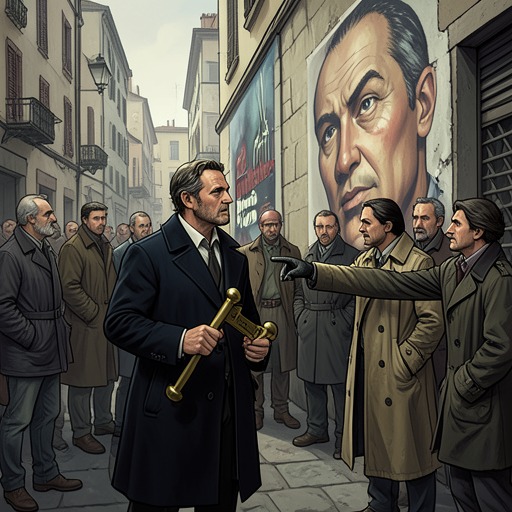
The GodfatherThe Maranzano War, also called the War of 1933, was the decisive conflict between Vito Corleone and Salvatore Maranzano that reordered the New York underworld. What began as a dispute over partnership became a contest between two different models of power: Maranzano’s larger, more visibly armed coalition and Vito Corleone’s smaller but more carefully organized system of intelligence, political connections, layered command, and selective force. The victory made Vito Corleone a nationally respected underworld leader and converted his organization from a successful local operation into an expanding empire.
Causes and Opposing Powers
The immediate cause of the war was the repeal of Prohibition, which threatened the economic foundations of Vito Corleone’s organization. His empire had prospered through the liquor trade and related protection arrangements, but the end of Prohibition promised to remove a major source of income. Vito Corleone had prepared for that change. In 1933, he sent emissaries to Salvatore Maranzano, who controlled much of the gambling world of Manhattan: dockside crap games, shylocking, sports and horse bookmaking, illicit poker houses, and the policy or numbers racket in Harlem. Vito proposed an equal partnership. His organization could provide police and political contacts, protection, and the strength to extend Maranzano’s operations into Brooklyn and the Bronx.
Maranzano rejected the offer with contempt. He regarded Vito Corleone as more like a parliamentary debater than a genuine Mafioso and trusted the support of Al Capone, his own men, and a substantial war chest. Maranzano also possessed powerful enforcers, a relationship with the Tattaglia Family, and political connections with business leaders who used his men against Jewish unionists in the garment center and Italian anarchist syndicates in the building trades. His organization appeared to have the advantage in manpower, money, alliances, and established influence.
Vito Corleone’s apparent weakness concealed a different kind of strength. He could deploy two small but superbly organized regimes led by Peter Clemenza and Salvatore Tessio. His police and political contacts were partly neutralized by the business interests supporting Maranzano, but the opposing forces did not understand the true scale or structure of the Corleone organization. They were even misled into believing that Tessio’s Brooklyn operation was independent. The war therefore began with Maranzano possessing greater visible force, while Vito Corleone possessed superior knowledge of what his own organization could actually do.
The War and Its Turning Point
Maranzano’s first major move was to call on Al Capone for two of his best gunmen to eliminate Vito Corleone. Intelligence contacts in Chicago warned the Corleone Family that the men were arriving by train. Vito Corleone sent Luca Brasi to deal with them, deliberately giving instructions that released Brasi’s most savage instincts. Brasi and four associates intercepted the Chicago gunmen at the railroad station. One of the men obtained a taxicab, and after the two gunmen entered, Brasi and another associate crowded into the vehicle with weapons ready and forced them onto the floor. The cab took them to a warehouse near the docks, where they were bound and silenced with towels stuffed into their mouths.
Vito Corleone then sent Al Capone a letter whose arrogance was calculated rather than impulsive. He regarded Capone’s public criminality and flaunted wealth as weaknesses because they had cost Capone political influence and the social camouflage that protected criminal power from destruction. Vito’s message was reinforced by the speed of his response: an attack from Chicago had been detected and neutralized before it could be used. Capone’s representatives consequently agreed not to interfere. The episode equalized the military odds and gave Vito Corleone an enormous reputation for intelligence, reach, and controlled ferocity.
For six months, Vito Corleone outmaneuvered Maranzano across several fronts. He raided crap games operating under Maranzano’s protection, found Maranzano’s largest policy banker in Harlem, and took both a day’s proceeds and the records connected with the operation. He sent Peter Clemenza and his men into the garment centers to support unionists against enforcers employed by Maranzano and the dress-firm owners. His organization and intelligence repeatedly proved superior, while Clemenza’s cheerful ferocity supplied carefully measured force. The reserve of Salvatore Tessio’s regime was eventually directed against Maranzano himself, turning the concealed strength of the Brooklyn operation into the war’s final instrument.
By then Maranzano’s soldiers were deserting him because they no longer wished to die for a losing cause. Bookmakers and shylocks began paying protection money to the Corleone organization, and Maranzano’s emissaries sought peace. Vito Corleone refused to receive them, delaying them on one pretext after another while the opposing structure collapsed. The war ended on New Year’s Eve in 1933. Tessio gained access to Maranzano through lieutenants who wanted a settlement and agreed to lure their chief to a supposed meeting in a Brooklyn restaurant. They left Maranzano at a checkered table and fled as Tessio and four men entered. The execution was swift, and Maranzano was shot while eating bread.
Settlement and Expansion
The war did not end with simple destruction. After Maranzano’s death, Vito Corleone incorporated the Maranzano empire into the Corleone operation. He allowed existing bookmakers and policy operators to keep their positions, placing them within a system of tribute rather than replacing them wholesale. This arrangement preserved productive local expertise while transferring ultimate authority and revenue to the victor. The Corleone Family also gained a foothold in the garment-center unions, an asset that would become extremely important in later years.
The settlement displayed the characteristic logic of Vito Corleone’s rule. Violence removed the rival leadership, but organization, continued employment, and protection stabilized the conquered territory. The result was not merely a battlefield victory but a durable governing arrangement. The same pattern would later define the broader Corleone system: personal loyalty and gratitude were converted into obligations, while information and organizational insulation made the central authority difficult to expose.
The war also accelerated the formalization of the Corleone Family. Vito Corleone appointed Peter Clemenza and Salvatore Tessio as caporegimes and placed soldiers beneath them, while Genco Abbandando became Consigliere. He inserted layers between himself and operational acts, issuing orders privately through trusted intermediaries so that no single subordinate could easily connect a field action to the Don. He divided Tessio’s group and assigned it responsibility for Brooklyn, separated Tessio from Clemenza except when necessary, and gave each captain a distinct sphere of authority. This structure made the organization more secure after victory and prevented its commanders from easily conspiring together.
Political Order After the War
The Maranzano War established the basis for Vito Corleone’s later authority over a wider world than the criminal underworld alone. During the Great Depression, people came to him for jobs, loans, help with landlords, assistance with relief applications, and intervention when relatives were jailed. He gave practical aid together with encouraging words, making charity feel like personal recognition rather than official humiliation. Italian voters consequently sought his advice about candidates for state and city offices and Congress, and practical political chiefs consulted him as a political power.
His influence extended into the future through education and patronage. Vito Corleone helped brilliant young men from poor Italian families attend college; some later became lawyers, assistant district attorneys, and judges. The war had shown that organized violence could defeat a rival, but Vito’s larger achievement was to connect violence with political relationships, legal institutions, employment, and social gratitude. His world functioned as an alternative government precisely because many people experienced it as more responsive than the official one.
That system was never pure benevolence. Families of imprisoned employees received living allowances, and men who maintained silence could expect a welcome, money, and renewed employment after release. Loyalty was protected materially, while betrayal was made both dangerous and irrational. Vito Corleone’s authority therefore rested on a combination of personal respect, reciprocal obligation, economic dependence, and the credible possibility of force. The Maranzano victory gave that arrangement room to expand.
Long-Term Significance
After the war, Vito Corleone pursued peace among underworld organizations throughout the United States. By 1939 he had negotiated a working agreement among powerful organizations in Los Angeles, San Francisco, Cleveland, Chicago, Philadelphia, Miami, and Boston. The agreement preserved each member’s internal authority while defining spheres of influence and enforcing peace. In this sense, the Maranzano War was both a violent beginning and a foundation for a later interstate order: the conflict made Vito powerful enough to replace open warfare with negotiated boundaries.
The war’s legacy remained visible even when the Corleone Family later declined and then changed direction. During the 1947 war against the Five Families, police pressure, economic losses, and challenges from the Barzini Family exposed the costs of weakened protection. Vito Corleone’s earlier system of buffers, intelligence, and negotiated influence nevertheless remained part of the Family’s institutional inheritance. At a later meeting involving Michael Corleone, Tom Hagen, Carlo Rizzi, Peter Clemenza, and Salvatore Tessio, succession and the Family’s reduced strength were treated as problems of organizational control rather than merely family sentiment.
Ultimately, the Maranzano War made possible the transition from Vito Corleone’s personal empire to Michael Corleone’s national power. After Michael Corleone’s bloody victory and a year of political maneuvering, the Corleone Family became unchallengeable; Peter Clemenza operated his own Family, Rocco Lampone served as Corleone caporegime, Albert Neri controlled security for the Family’s hotels in Nevada, and Tom Hagen belonged to Michael’s Western Family. The war therefore mattered not only because Maranzano was killed, but because the victory created the territorial reach, organizational discipline, and political imagination that allowed the Corleone Family to survive successive changes of leadership and move its center toward Las Vegas.